
SEO

Google Business Profile Social Links

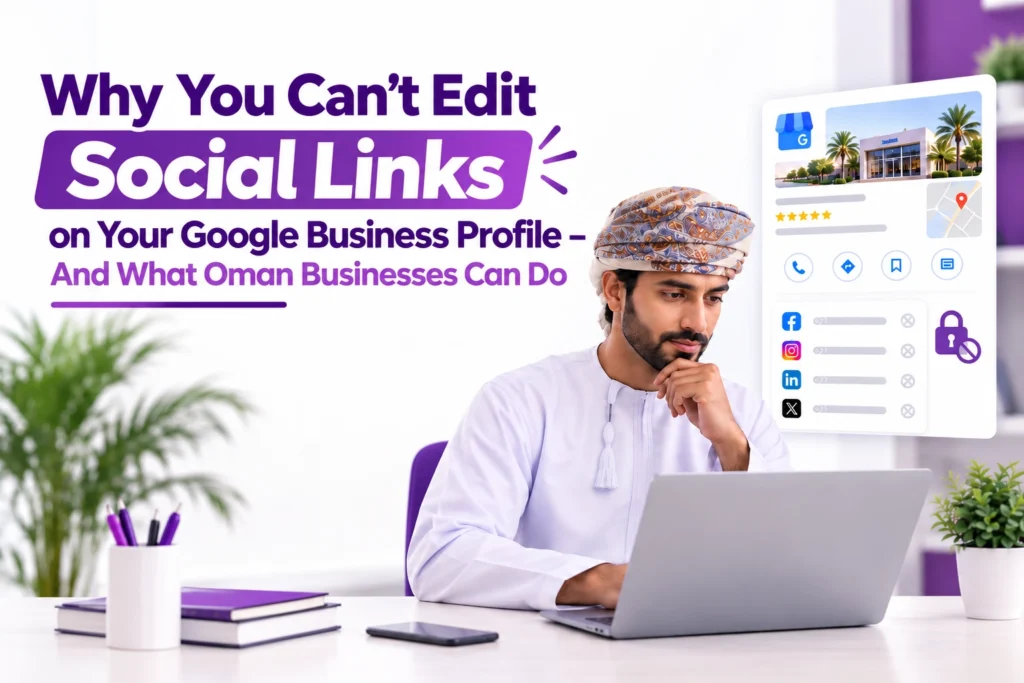
Why You Can’t Edit Social Links on Your Google Business Profile — And What Oman Businesses Can Do

If you manage a Google Business Profile (GBP) in Oman, India, or several other markets, you’ve probably hit a frustrating wall: the Social Profiles editing option simply doesn’t exist in your dashboard. You scroll through Contact Information, check every tab, and find no field to add your Instagram, Facebook, LinkedIn, or YouTube links. You’re not doing anything wrong. Google has never made this feature universally available. This isn’t a case of links mysteriously vanishing. It’s a region-limited rollout — and understanding that distinction is the first step toward solving it. The Real Problem: A Feature That Isn’t Available Everywhere Google officially confirms that the ability to manually add or edit social media links inside GBP is: “Currently available for select regions and may not be accessible to all Business Profiles.” In practice, this means a business in the United States or United Kingdom may see a clean “Add social profile” button, while an identical business in Oman or India sees nothing at all. This creates two major headaches for genuine businesses. 1. You Can’t Proactively Link Your Official Social Accounts Customers searching for your brand on Google have no direct path to your: Instagram Reels Facebook updates LinkedIn thought leadership YouTube videos You lose a seamless bridge between search and social engagement, which can lower trust and reduce conversions. 2. Wrong or Outdated Links May Still Appear Even when you can’t edit the field, Google may still display social links on your profile. These are often: Auto scraped from your website Pulled from third party directories Based on old or similarly named businesses If your old Facebook page still exists, if a competitor has a stronger web presence, or if your site’s structured data is outdated, the wrong links can show up on your public Knowledge Panel — with no edit button to fix them. For Omani businesses competing in a crowded digital landscape, this can directly impact credibility and lead quality. Why Google Limits This by Region Google rarely explains exactly why a feature rolls out to one country and not another, but the pattern is consistent: New GBP capabilities typically launch first in English speaking, high ad spend markets. They then expand gradually to other regions. Members of the Local Search Forum confirmed this early on: the social profiles field was visible in some dashboards but explicitly “not available in every country yet.” The 2026 enforcement waves — mass algorithmic suspensions that began in late April — added another layer of complexity. While those waves targeted spam and policy violations, they also tightened backend controls across affected regions. For markets already on the edge of feature availability, this may have delayed or restricted rollout further. However, the core issue remains: the editing option was never fully enabled in your region to begin with. What Oman Businesses Can Do Right Now You cannot force Google to unlock the social profiles field overnight, but you can take control of the signals that shape what appears on your Knowledge Panel. 1. Add sameAs Schema to Your Website Insert JSON LD markup in your site’s header that explicitly lists every official social profile. Example: { “@context”: “https://schema.org”, “@type”: “LocalBusiness”, “name”: “Your Business Name”, “url”: “https://yourdomain.com”, “sameAs”: [ “https://www.instagram.com/yourbrand”, “https://www.facebook.com/yourbrand”, “https://www.linkedin.com/company/yourbrand”, “https://www.youtube.com/@yourbrand” ] } This structured data tells Google exactly which accounts belong to your brand, increasing the odds that correct links auto populate even when manual editing is unavailable. 2. Audit Your Website’s Social Links Check your: Header Footer Contact page Every social icon should point to your current, official profile. Remove: Dead redirects Abandoned accounts Outdated platforms Clean signals reduce the risk of Google scraping the wrong information and displaying it on your GBP. 3. Submit Feedback Through Your Knowledge Panel On your public profile: Scroll to the bottom. Click “Feedback”. Clearly state that the social profiles editing option is missing in your region (Oman/GCC). Aggregated feedback influences Google’s product roadmap and can accelerate regional rollouts. 4. Post in the Official GBP Help Community Document your issue with: Screenshots of your dashboard Your business location Details of the missing feature Posts that are confirmed by Google Product Experts have a higher chance of being escalated to engineering teams. 5. Check Both Mobile and Desktop Feature availability sometimes differs between: The Google Maps mobile app The desktop GBP dashboard Test both interfaces before concluding the option is completely absent. Awareness Builds Resilience Platform limitations are frustrating, but they are not insurmountable. The businesses that thrive are the ones that: Understand the rules of the game — including which rules have not reached their market yet. Optimize around those limitations with strong technical SEO and brand consistency. By strengthening your website signals, auditing your digital footprint, and actively engaging Google’s support channels, you maintain accuracy and trust even when a dashboard feature is out of reach. How SPECTRUM Solutions Can Help At SPECTRUM Solutions, we help businesses across Oman and the GCC navigate: Platform shifts Regional rollouts Evolving local SEO landscapes Whether you need to: Fix your structured data Align your brand presence across channels Build a digital strategy that works regardless of algorithmic gatekeeping our team ensures you stay visible, credible, and competitive. Ready to take control of your online presence? Visit www.spectrumoman.com and let SPECTRUM Solutions guide your digital marketing journey. Sources Manage your social media links — Google Business Profile Help How to Add Social Media Links to Your GBP — GMB Briefcase Adding Social Media Links to GBP — Local Search Forum Google Not Showing Social Profiles — Local Search Forum
The Future of SEO in the Age of AI Search

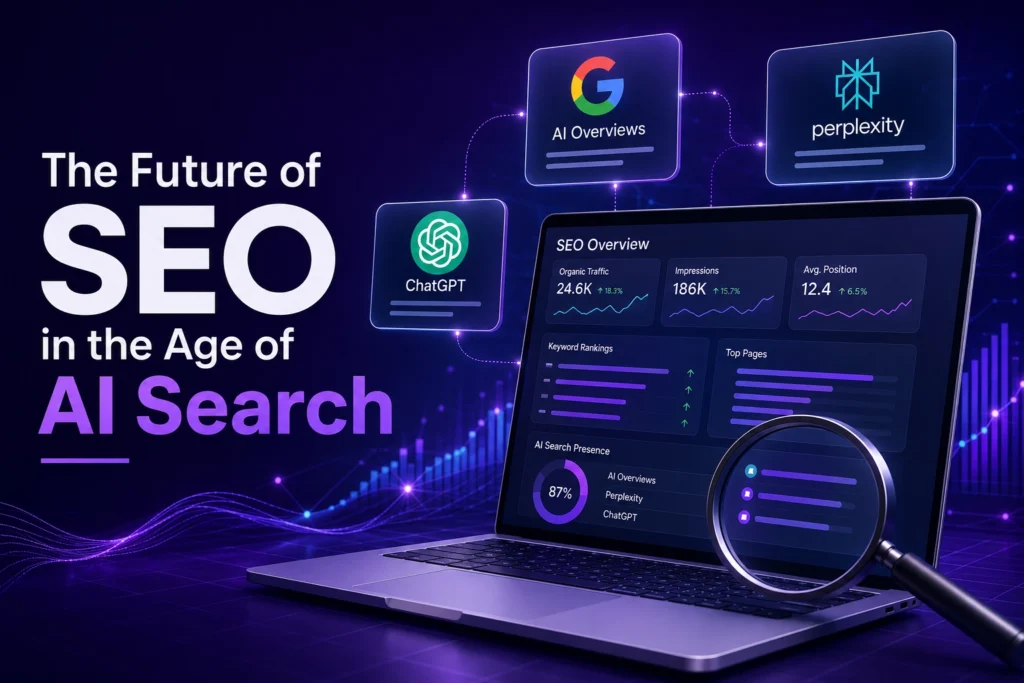
The Future of SEO in the Age of AI Search

The Future of SEO is changing rapidly. For two decades, SEO followed a predictable formula: rank in ten blue links, earn the click, win the customer. That formula is breaking. AI-powered search — ChatGPT, Google’s AI Overviews, Perplexity, and a growing wave of assistants — doesn’t hand users a list of links to sift through. It hands them an answer. And that shift is forcing marketers to rethink what “visibility” even means. This isn’t the death of SEO. It’s a redefinition of it. Here’s what’s changing, and how businesses can adapt. From Rankings to Retrieval Traditional SEO optimized for one goal: rank high enough on a results page that a human clicks through. AI search changes the target. Instead of ranking a page, AI systems retrieve and synthesize information from many sources to generate a single response. Your content isn’t competing to be clicked — it’s competing to be cited, summarized, or ignored entirely. This means the unit of optimization is shifting from the page to the passage. AI systems pull specific facts, definitions, and explanations out of context, not whole articles. A page can rank well in traditional search while being invisible to an AI answer engine if its most useful information is buried, poorly structured, or ambiguous. Why Structure and Clarity Matter More Than Ever AI models favor content that is easy to parse and extract. That rewards: Clear, direct answers near the top of a page — not answers buried under 800 words of preamble. Well-labeled headings and subheadings that map to real questions people ask. Structured data — lists, tables, FAQs, and schema markup — that machines can parse cleanly. Original data, expertise, and specificity, since AI models increasingly favor sources that add something beyond a rehash of existing content. In short, the sites that win in an AI-search world often look a lot like the sites that were already best for human readers: clear, well-organized, and genuinely useful. The Rise of “Answer Engine Optimization” A new term is emerging alongside SEO: AEO, or Answer Engine Optimization. The goal is different from ranking — it’s about becoming the source an AI model trusts and cites when generating a response. That involves: Building topical authority through consistent, in-depth coverage of a subject rather than scattered, thin posts. Earning mentions and citations from other credible sites, since AI models weigh corroboration across sources. Using structured formats (Q&A sections, comparison tables, definitions) that map naturally to how people phrase questions to AI assistants. Keeping information current, since outdated content is a fast way to lose trust with both readers and models. AEO doesn’t replace SEO — it sits on top of it. The technical fundamentals (site speed, crawlability, mobile experience, backlinks) still matter, because AI systems still rely heavily on the same web infrastructure that traditional search does. Brand Visibility Beyond the Click One of the biggest mental shifts marketers need to make: traffic is no longer the only measure of success. If an AI assistant summarizes your product comparison and recommends your brand without ever sending a click to your site, that’s still a win — arguably a bigger one, since it reaches the user at the exact moment of decision-making. This means brand mentions, reputation, and third-party validation (reviews, press coverage, forum discussions, expert commentary) matter more than ever. AI models are trained on the broader information ecosystem, not just your website. Being talked about — accurately and positively — across the web is becoming as important as being found on it. What Businesses Should Do Now Audit content for extractability. Can a machine pull a clean, accurate answer from your page in a few sentences? Double down on expertise. Original research, first-hand experience, and clear authorship signal trustworthiness to both readers and AI systems. Monitor AI visibility, not just search rankings. Start tracking how often your brand appears in AI-generated answers, not just where you rank on Google. Keep humans at the center. Content written to please an algorithm often reads poorly — and both search engines and AI models are getting better at detecting that. Writing for real people remains the safest long-term strategy. Don’t abandon technical SEO. Fast, crawlable, well-structured sites remain the foundation AI systems build on. The Bottom Line: The Future of SEO in the Age of AI Search SEO isn’t disappearing — it’s evolving into something broader: a discipline focused on being the trusted, citable source across an entire information ecosystem, not just a link on a results page. The businesses that thrive in this next era won’t be the ones chasing algorithm tricks. They’ll be the ones that consistently produce clear, credible, genuinely useful content — because that’s exactly what both humans and AI models are looking for. The future of SEO isn’t about gaming a system. It’s about becoming the answer worth trusting.

SEO in Oman

The Modern Blueprint for SEO in Oman & the GCC: Why Organic Search Still Reigns Supreme

SEO in Oman & the GCC remains the absolute foundation of sustainable digital growth. In a rapidly changing digital marketing landscape, businesses are constantly chasing the next big trend. From viral social media campaigns to highly targeted pay-per-click (PPC) ads, the options for capturing consumer attention are endless. However, amidst these shifting channels, one fundamental truth remains: Search Engine Optimisation (SEO) remains the absolute foundation of sustainable digital growth. For brands operating across Muscat, Salalah, Sohar, and the wider Gulf Cooperation Council (GCC) region, appearing prominently in organic (unpaid) search engine results isn’t just a marketing goal—it is a critical business priority. In the Middle East, Google commands an overwhelming 93.2% of the search market share. This means that whether a prospective customer in Riyadh is looking for real estate or a business owner in Muscat is searching for professional services, Google determines whether they find your brand or your closest competitor. Navigating the Oman & GCC Digital Landscape Oman’s digital economy is undergoing an unprecedented acceleration, closely aligned with the digital transformation mandates of Oman Vision 2040. With internet penetration soaring past 93% and an incredibly tech-savvy, mobile-first population, consumer behaviour has permanently shifted online. Showing up on page one of Google is no longer an optional luxury for businesses aiming to expand; it is essential for long-term operational survival. Key Market Indicators To contextualize this rapid evolution, consider these defining market indicators across Oman and the broader MENA region: Market Indicator Regional Data Point & Strategic Impact Internet Penetration — Oman 93%+ (ITU, 2024) — Suggests a nearly fully connected consumer and business audience. Mobile Internet Users ~88% access via smartphone, demanding flawless mobile optimization. Google Market Share — MENA 93.2% — Establishes Google as the primary gatekeeper for consumer intent. Arabic Language Searches Fastest-growing language on Google globally, shifting the focus to localized content. GCC E-commerce Revenue USD 50B+ projected by 2025, representing a massive digital transaction pool. Oman Vision 2040 Digital Economy is a core pillar of the national growth and economic diversification strategy. The 5 Pillars of Effective SEO for the Oman Market Achieving sustainable visibility on Google within the Gulf market requires a localized approach. Generic, one-size-fits-all global SEO templates fail because they ignore regional cultural nuances, language habits, and technical infrastructure. At Spectrum Oman, our frameworks are built around five core pillars engineered for local market dynamics: 1. Bilingual Keyword Research (Arabic + English) The Gulf market exhibits a unique dual-language search behaviour. While corporate business-to-business (B2B) queries frequently happen in English, a massive portion of consumer search intent occurs entirely in Arabic. Bilingual keyword research maps out both language streams, ensuring your brand captures the entire addressable market rather than leaving money on the table. 2. Local SEO & Google Business Profile Optimization “Near me” and location-specific searches skyrocketed by over 200% in the GCC in recent years. For businesses with physical footprints, offices, or localized service delivery areas across Oman, a meticulously optimized Google Business Profile is non-negotiable. It ensures your brand dominates localized map packs when high-intent buyers look for immediate solutions nearby. 3. Mobile-First Technical SEO With roughly 88% of users accessing the internet via smartphones, Google relies strictly on mobile-first indexing. If your corporate website takes too long to load on a mobile connection, or if its layout forces users to pinch and zoom, your search rankings will suffer. Technical SEO guarantees clean code, rapid loading times, and a highly responsive design tailored for mobile devices. 4. Quality Content Creation Tied to E-E-A-T Google’s Search Quality Rater Guidelines heavily reward content that demonstrates Experience, Expertise, Authoritativeness, and Trustworthiness (E-E-A-T). Thin, shallow, or generic copy copied from competitors is actively penalized. To rank well in Oman, your digital content must provide genuine value, showcasing localized insights and clear professional authority. 5. Local Link Building & Domain Authority Search engines view backlinks from other websites as votes of confidence. However, a link from a generic international blog carries very little weight for a business trying to rank in Muscat. Building domain authority in the GCC requires a deliberate strategy of securing high-quality, localized links from .om domains, regional business directories, and trusted Middle Eastern press outlets. Compounding Returns: What Oman Businesses Can Expect from SEO It is vital to approach SEO as a long-term capital investment rather than a short-term marketing expense. Unlike paid advertising channels (such as PPC or paid social) where visibility vanishes the exact moment you turn off your daily ad spend, SEO builds a durable digital asset that drives consistent traffic over time. Typical SEO Performance Timeline Months 1–3 (The Foundation) Focuses heavily on comprehensive technical site audits. Correcting backend errors. Establishing keyword mapping frameworks. Executing initial on-page optimizations. Months 3–6 (The Ascent) Initial rank improvements begin to show for localized, long-tail search terms. Accompanied by a steady, measurable uptick in organic impressions and site traffic. Months 6–12 (The Breakthrough) Strategic content and authority building yield page-one rankings for high-volume, highly competitive industry keywords. Often driving a 3x to 5x growth in targeted organic traffic. Months 12+ (The Authority Phase) Your website establishes deep topical authority. Results in sustained top positions and a massively reduced cost-per-acquisition (CPA) compared to paid media channels. Investing in a robust search strategy generates an extraordinary average ROI of 748%—outperforming almost every other digital channel available to modern marketers. Five Critical Pitfalls to Avoid in the Local Market Many businesses in the region underperform digitally because they fall into common operational traps: 1. Ignoring Arabic SEO Focusing exclusively on English-language keywords misses out on more than 60% of local search intent, leaving a massive portion of the market open to competitors. 2. Relying on Thin or Duplicate Content Google’s sophisticated algorithms are designed to penalize low-value pages that merely replicate information found elsewhere on the web. 3. Neglecting Mobile Optimization Slow, unoptimized, non-mobile-friendly websites frustrate users and trigger direct penalties from search engines. 4. Leaving Google Business Profile Unmanaged Failing to claim, update, and actively maintain your local profile cuts

SEO in 2026

SEO in 2026: Why Your Website Needs More Than Just Keywords to Survive

SEO in 2026 has fundamentally changed the rules of visibility. The SEO playbook you mastered in 2023 is officially obsolete. Search engines have evolved beyond simple keyword matching into sophisticated AI-powered answer machines, and if your content strategy hasn’t adapted, you’re invisible to the fastest-growing segment of online search. Welcome to the era of Generative Engine Optimization (GEO) and Answer Engine Optimization (AEO)—where AI models like ChatGPT, Gemini, and Perplexity decide whether your brand exists in search results. The Seismic Shift: From Keywords to Conversations Remember when SEO meant stuffing “best restaurant in Muscat” into every paragraph? Those days are extinct. Today’s searchers ask complete questions like actual humans:“Where can I find authentic Omani seafood near Qurum that’s family-friendly and under 20 OMR per person?” AI search engines understand this intent, extract answers from authoritative sources, and deliver them instantly—without users ever clicking your website. This isn’t a distant threat. It’s happening now. ChatGPT Search, Google’s Search Generative Experience (SGE), and Perplexity are already answering millions of queries daily by synthesizing information from websites they trust. The critical question: Is your website one of them? GEO: Making Your Content AI-Readable Generative Engine Optimization means structuring content so AI models can extract, understand, and cite your expertise. Think of AI as an extremely intelligent but literal-minded researcher scanning millions of pages per second. It favors content with clear hierarchies, verified facts, explicit expertise markers, and logical topical clusters. Practical implementation requires crystal-clear heading structures, authoritative author bios establishing E-E-A-T credentials, direct factual statements AI can quote confidently, and interconnected content demonstrating deep subject mastery. A single brilliant blog post won’t cut it—you need comprehensive topic coverage that proves you’re the definitive authority in your niche. AEO: Owning the Answer Box Economy Answer Engine Optimization focuses on capturing featured snippets and AI-generated responses. When someone asks “How much does website development cost in Oman?”, the AI needs to find your precise, well-structured answer immediately. The winning formula includes FAQ sections formatted with schema markup, numerical data presented clearly in lists or tables, step-by-step how-to content, and comparison frameworks. Structured data isn’t optional anymore—it’s the language AI engines speak fluently. JSON-LD schema markup transforms your content from plain text into machine-readable intelligence that AI models prioritize. Topical Authority: The New Backlink Google’s 2026 algorithm cares less about how many websites link to you and more about how comprehensively you cover your subject. Building topical authority means creating content clusters around core themes, answering every related question exhaustively, demonstrating real-world expertise with case studies and examples, and consistently updating content to maintain relevance. For an Omani digital marketing agency, this means not just writing “What is SEO?” but covering every facet: technical SEO, local SEO for Gulf markets, Arabic SEO optimization, e-commerce SEO strategies, SEO for specific industries operating in Oman, and more. Breadth and depth signal authority. The Human Expertise Imperative AI can generate content, but it cannot replicate genuine experience. Google’s algorithms now aggressively detect and penalize purely AI-written content lacking human validation. The winning combination integrates AI efficiency for research and structure with authentic human expertise proven through original data and insights, client testimonials and case results, expert commentary and analysis, and real-world problem-solving examples. 5 Free Tools Dominating SEO in 2026 Smart marketers navigating SEO in 2026 leverage these AI-powered tools without spending fortunes. Perplexity AI provides instant competitor research and GEO-optimized content sourcing. Google Search Console Insights reveals which content Google’s AI favors, guiding your optimization priorities. AnswerThePublic uncovers the exact conversational queries your audience asks. Frase AI structures content for maximum AI digestibility. Schema Markup Generators create the structured data AI engines demand. These aren’t nice-to-have tools—they’re essential infrastructure for SEO success in 2026. The Reality Check: SEO Isn’t Dead, It’s Evolving Every technological shift spawns “SEO is dead” proclamations. It’s never true. SEO evolved for mobile, adapted for voice search, and now SEO in 2026 is transforming for AI. The fundamentals remain: provide genuine value, establish authority, structure information intelligently, and make content discoverable. What’s changed is the execution. Success in SEO in 2026 requires understanding how AI thinks, optimizing for machine readability without sacrificing human engagement, and building comprehensive topical authority that AI models trust enough to cite. Ready to Win AI-Powered Search in 2026? Don’t let your competitors dominate AI-powered search results. SPECTRUM’s result-oriented SEO strategies combine cutting-edge GEO and AEO techniques with proven ranking methodologies. We don’t just optimize websites—we position Omani brands as AI-citable authorities in their industries. Contact SPECTRUM Today:Visit: www.spectrumoman.comCall/WhatsApp: +968 95111475 Because in 2026, being found means being trusted by AI—and we know how to earn that trust.

SEO for Businesses

Why Every Company Needs SEO: Essential Activities for Long-Term Success

In today’s digital-first economy, your company’s online visibility directly determines its growth potential. Search Engine Optimization (SEO) has evolved from a “nice-to-have” marketing tactic into a fundamental business necessity. Neglecting SEO means risking invisibility to the vast majority of potential customers who begin nearly every buying journey with an online search. Why SEO Is Non-Negotiable Over 90% of online experiences start with a search engine. If your business doesn’t appear in relevant search results, your competitors will capture those customers instead. Beyond mere visibility, effective SEO delivers multiple strategic advantages: SEO Benefits and Business Impact SEO Benefit Business Impact Visibility at Critical Moments Appears when prospects actively search for your products or services Enhanced Credibility Top search rankings signal authority and trustworthiness to consumers Cost-Effective Lead Generation Organic traffic continues flowing without ongoing ad spend Scalable Reach Targets local customers and expands to global markets simultaneously Sustainable Competitive Edge Builds digital assets that compound in value over time Unlike paid advertising that stops delivering results the moment your budget runs out, strong SEO provides continuous organic traffic and leads without recurring costs. It’s an investment that keeps paying dividends, making it one of the most cost-effective marketing strategies available. The 10 Must-Do SEO Activities Sustainable SEO success requires a comprehensive, ongoing approach. These ten activities form the foundation of any effective long-term strategy: Core SEO Activities Matrix Activity Key Actions Priority Level 1. Keyword Research Use SEMrush, Ahrefs, or Google Keyword Planner; target short-tail, long-tail, and voice search phrases Critical 2. Quality Content Creation Publish original, valuable content through blogs, guides, FAQs, and videos Critical 3. On-Page Optimization Optimize headlines, meta descriptions, image alt text, and internal linking High 4. Technical SEO Ensure mobile responsiveness, fix broken links, implement HTTPS and schema markup High 5. User Experience (UX) Create intuitive navigation, fast loading times, and accessibility compliance High 6. Link Building Acquire quality backlinks through digital PR, guest posting, and partnerships Medium-High 7. Local SEO Optimize Google My Business, manage reviews, create location-specific content Medium (if applicable) 8. Analytics & Monitoring Track metrics via Google Analytics and Search Console; conduct regular audits Critical 9. Algorithm Adaptation Stay informed on search engine updates; test and refine tactics continuously Medium-High 10. Content Updates Refresh outdated content, add new sections, optimize for current trends Medium Breaking Down the Essentials Keyword Research forms the foundation. Understanding what your customers actually search for—including emerging trends and voice search queries—ensures your content reaches the right audience. High-Quality Content Creation answers your audience’s questions and solves their problems. Search engines reward websites that provide genuine value, not keyword-stuffed fluff. Technical SEO ensures search engines can properly crawl, index, and understand your website. Mobile responsiveness, fast loading speeds, and secure HTTPS protocols are non-negotiable in today’s environment. Link Building remains crucial but must focus on quality over quantity. Earn backlinks from authoritative, relevant sites through genuine relationships—not spammy link schemes that can trigger penalties. Local SEO is essential for businesses serving specific geographic areas. Maintaining consistent listings across Google My Business, Bing Places, and Apple Maps, while actively managing customer reviews, drives nearby consumers to your door. Continuous Monitoring transforms SEO from guesswork into data-driven strategy. Regular audits reveal opportunities and problems before they impact your rankings significantly. The Long-Term Payoff SEO isn’t a one-time project—it’s an ongoing journey that compounds in value over time. Companies that commit to holistic, ethical, and persistent SEO strategies enjoy: Steady Organic Growth: Continuous customer acquisition without proportional increases in marketing spend Brand Authority: Enhanced reputation as an industry leader and trusted resource Marketing Efficiency: Reduced reliance on expensive paid advertising channels Strategic Agility: Ability to adapt quickly to digital trends and evolving consumer behavior The Bottom Line Ignoring SEO in today’s landscape is like opening a physical store but failing to put up signage or provide directions. Your business exists, but customers can’t find you. Every company, regardless of size or industry, must treat SEO as a core business function. Strictly implementing these essential activities and maintaining relentless focus delivers sustained competitive advantages that are too significant—and too strategic—to ignore. The question isn’t whether you can afford to invest in SEO. It’s whether you can afford not to.

Content SEO

Mastering the 5 Pillars of Content SEO

Good content remains key for search rankings. Smart content optimization helps businesses get found online. These five content principles enable Omani companies to compete effectively both locally and internationally in today’s digital world. Why Content SEO Dominates in 2025 Creating and organizing website text and images is Content SEO. Now it combines user understanding, technical skills, and smart storytelling beyond just keywords. The 5 Essential Pillars of Content SEO 1. Content Creation: The Foundation of Digital Success Good content helps your website appear in search results when visitors look for your services or products and makes them customers. 2025 Content Creation Statistics: People over 40 (Gen. X) prefer reading detailed articles. Websites posting 16+ articles monthly get much more traffic. Longer articles (2,000+ words) earn more links from other sites. Companies that blog regularly get 67% more potential customers. Content Creation Best Practices for 2025 – Strategic Content Planning: Plan topics that show your expertise. Write detailed, helpful articles with original ideas. Include local examples for your audience. Create different content types like articles and visuals. Plan content months ahead. Mix timeless topics with current trends. 2. Content Curation: The Art of Presentation Organizing the appearance of website content using images, fonts, spacing, and layout is content curation. A good presentation makes people want to read and stay on your site. 2025 Visual Content Statistics: Images are processed 60,000 times faster than text. Articles with pictures get 94% more views. Infographics get shared three times more than plain text. Visual posts get 650% more engagement. Essential Curation Elements: Use distinctive headings and good spacing. Break long paragraphs into short chunks. Add bullet points and numbered lists. Include relevant images and charts. Make sure everything works well on phones. For Oman, use local images. Respect cultural preferences in design choices. 3. Keyword Integration: The Strategic Foundation Smart keyword use boosts website visibility. 2025 Keyword Research Statistics: Most searches (70%) use longer phrases with 3+ words. Voice search makes up 27% of all searches. Local searches grew 58% recently. Nearly half of Google searches are for local businesses. Modern Keyword Integration Strategies: Focus on what people actually want, not just popular words. Research what competitors miss. Use location names like Muscat or Salalah for local business. Include Arabic terms when helpful. Strategic Keyword Placement:Put main keywords in titles, descriptions, first paragraph, headings, and image descriptions naturally. 4. Headers: The Roadmap for Success Headers make pages easier to read and help with search rankings. 2025 Header Optimization Statistics: Good header structure pages rank 36% higher in search results. People spend 37% more time reading well-organized content. Most users (73%) scan headers first before reading everything. Clear headers make content 45% more likely to be shared. How to Write Better Headers: Use one main header (H1) with your key keyword per page. Create smaller headers (H2, H3) for subtopics in order. Write clear, short headers under 60 characters. Include location names for local businesses. Ask questions in headers for voice search. Use numbers and action words. Make sure headers work well on phones. 5. Anchors: The Connection Points Anchor text is the clickable words in links. 2025 Anchor Text Statistics: Pages with good anchor text get 23% more clicks. Internal links with clear descriptions boost page authority by 31%. Generic phrases like “click here” reduce link value by 47%. Smart anchor text keeps visitors on pages 28% longer. Strategic Anchor Text Optimization: Use specific words that describe where the link goes. Avoid vague phrases like “read more.” Keep anchor text short but clear (2-5 words). Link to reliable outside sources and related pages on your website. Use different anchor text when linking to the same page more than once. Test links frequently to make sure they are functional. Make links visually clear with colors or underlines. Integrating the 5 Pillars Success comes from combining all content SEO elements into one plan. The Spectrum Solutions Content Framework Planning Phase: Research keywords for your business and location. Choose topics that help customers and meet business goals. Plan content structure and links. Creation Phase: Write helpful, expert content. Use keywords naturally. Add clear headings and useful links. Optimization Phase: Make content look good on all devices. Test link performance. Check results and make changes based on what works best. 2025 Content SEO Success Metrics Traffic Metrics: Grow search visitors by 25-40% yearly. Rank in top 10 for main keywords. Get more clicks than competitors. Engagement Metrics: Keep visitors reading for 3+ minutes. Get them viewing 2-3 pages per visit. Reduce people leaving quickly. Conversion Metrics: Turn 2-5% of readers into customers. Get shares and links. Local Content SEO for Omani Businesses Include local culture and Arabic content when suitable. Reference Omani landmarks and events. Focus on mobile users (95% in Oman). Create content for both local and international customers. The Future of Content SEO Make content AI and voice search friendly by answering questions naturally. Write original, authoritative content AI can reference. Optimize images with clear descriptions. Include FAQ sections with conversational questions. Focus on helping people find answers through new search technologies. Your Content SEO Action Plan Week 1-2: Check current content for keywords. Fix headings and links. Start posting regularly. Month 1-3: Plan content topics. Group related articles together. Improve how the content looks. Use local keywords. 3-12 months: Keep publishing consistently. Track what works. Try new content types. Stay updated. Five key areas – creating content, presenting it well, using keywords, organizing headers, and linking properly – are essential for online marketing success in 2025. Spectrum Solutions Oman combines international SEO expertise with deep local market knowledge to create content strategies that deliver measurable results. Omani companies must master these skills to compete locally and internationally. Good content that helps users gets rewarded online. 📞 Contact Spectrum Oman: +968 95111 475 | ✉️ mail@spectrumoman.com for expert SEO help and proven results.

On-Page SEO

Mastering the 5 Pillars of On-Page SEO in 2025

With millions of searches happening every day, getting your website to show up on Google is more important than ever in 2025. Businesses in Oman are realizing that in order to compete, they need to have a strong online presence. Oil and gas companies are among the industries that Spectrum Solutions Oman, a Muscat-based web design and digital marketing firm, helps to enhance the functionality of their websites. They concentrate on managing social media marketing and creating unique websites while keeping cybersecurity in mind. There are five main areas you can focus on to improve your website’s search rankings. This guide breaks down these in simple terms. Businesses, from big corporations to tiny local stores, can use these strategies and improve online competition and increase website traffic without spending money on advertising. 1. Page Titles: The Gateway to Your Content The page title is the clickable headline that shows up in search results. In 2025, Google changed more than 61% of page titles on its own. Titles that are 40–60 characters long get about 8.9% more clicks than longer ones. Pages with keywords in their web addresses also get 45% more clicks on average. The ideal strategy is to keep the title under 60 characters and organically incorporate your primary keyword. 2. Meta Descriptions: Summarizing Your Page for Maximum Appeal Usually 160 characters long, a meta description is a summary of a webpage that shows up in search results below the page title. It invites users to click, much like a teaser. In 2025, a clear and interesting description can increase clicks and user interest even though it might not directly raise rankings. Google changes descriptions a lot, so it is important to put forth what users want and what value your product or service brings. Well-written descriptions that relate to what people are searching for can see a 5–10% increase in click-through rates. Also, since the majority of searches are now done on mobile devices, keep your descriptions between 150 and 160 characters for best results. Our digital marketing team at Spectrum Solutions Oman crafts compelling meta descriptions that highlight key benefits, helping companies increase visibility and attract the right kind of customers. 3. Schema: Transforming Unstructured Data for Better Crawling Schema markup is a special code that helps search engines better understand what’s on your website. It takes messy, unorganized information and puts it in a clear format that search engines can easily read. Currently, over 45 million websites use this code, and many see their click rates go up by 30%. For businesses, adding schema markup for local information, products, or events can make a big difference. As an Atlassian Platinum Solution Partner and web design specialists, Spectrum Solutions Oman integrates schema into websites seamlessly to strengthen visibility and improve overall search performance. 4. Image Optimization: Balancing Quality and Speed for SEO Gains The foremost image optimization aim is to enhance the image while retaining the quality. This is important for image ranking. Sites having optimized images witness an average increase of 21% in session page views. Images optimized for search engines can drive a significant amount of traffic. According to research, image search accounts for 22.6% of all Google searches. At Spectrum Solutions Oman, innovative designers ensure that client websites adhere to the best practices for user retention. Spectrum’s designers employ techniques such as WebP formats and lazy loading to ensure a seamless 2-second load time user experience. 5. Alt Text: Enhancing Accessibility and Image Indexing Alt text is a short description you add to images on your website. It tells search engines what’s in the picture, and it also helps people who can’t see well understand what the image shows. About 1 in 5 web searches are people looking for images; hence, having good descriptions can bring more visitors to your site. Some countries now have laws requiring websites to be accessible, and about 12% of websites without proper alt text could face problems for not following these rules. At Spectrum Solutions Oman, our content team writes clear, short alt text descriptions (usually under 125 characters) that include relevant keywords. This helps images show up in searches. Enhance Your On-Page SEO Performance with Spectrum Solutions Oman In 2025, most people who search on Google — about 65 out of 100 — click on the regular search results instead of ads. Also, businesses using smart technology and AI tools are seeing better results with their SEO efforts. At Spectrum Solutions Oman, we combine smart design, structured data, and thorough SEO practices to help your brand grow in a competitive market. 📍 Visit: www.spectrumoman.com📞 Call: +968 95111 475 / +968 91702090📧 Email: mail@spectrumoman.com Start optimizing your website for lasting success today!

Alternative Search Engine Optimization

Alternative Search Engine Optimization: The Essential Guide Beyond Google in 2025

Today’s web operates like a chameleon, adapting results to perfectly match each visitor’s needs. Every search feels like a personalized conversation, and websites now compete not just for visibility, but for relevance. Businesses are realizing that relying solely on Google is risky – enter alternative search engine optimization. The Changing Search Engine Landscape Bing, DuckDuckGo, and Brave are gaining traction, while industry-specific platforms continue to rise. This shift shows users are exploring beyond Google, seeking privacy, personalization, and results that truly serve them. For businesses, adapting to alternative search engine optimization may seem complex, but the rewards are substantial. Less crowded platforms can deliver stronger visibility, steadier traffic, and more loyal audiences. Understanding Different Ranking Factors Each search engine values different signals, making alternative search engine optimization unique: DuckDuckGo: Focuses on good content, site speed, and mobile responsiveness—without tracking users. Bing: Considers social signals—popular content on platforms like Facebook or Twitter ranks higher. Vertical Search Engines: Prioritize industry-specific data. For instance, legal engines value citations and credentials, while real estate ones focus on property details and locations. Unlike Google’s ever-changing algorithms, these engines reward straightforward quality and relevance. The Strategic Advantage for Small Businesses Small businesses often overlook alternative search engine optimization, which means less competition and easier rankings. Efforts that may take months on Google can yield faster results elsewhere. Plus, these platforms don’t change their rules as frequently—making them more stable and cost-effective. Practical Implementation Strategies Technical FoundationEnsure your website is crawlable by all platforms. Update your robots.txt file to welcome not just Google but other engines too. Content OptimizationCreate content that connects directly with users—valuable for privacy-focused searches and engaging enough for social-driven platforms. Meta Data CustomizationCraft page titles and descriptions that work universally, while remaining compelling across Bing, DuckDuckGo, and niche search engines. Privacy ComplianceRespect user privacy. Clear policies, minimal data collection, and no hidden trackers build trust and long-term visibility. Looking Forward: The Future of Search Diversity Google will remain dominant, but diversifying through alternative search engine optimization provides resilience. The smart move is testing other platforms and prioritizing those where your customers search most. Early adopters will have a decisive edge in 2025 and beyond. Conclusion Optimizing for multiple search engines isn’t replacing traditional SEO—it’s evolving it. Businesses that embrace alternative search engine optimization gain stability, reach untapped markets, and reduce reliance on Google. Spectrum Oman makes this transition simple with strategies designed for today’s multi-platform search landscape. 📞 +968 95111 475 | +968 91702090📧 mail@spectrumoman.com | 🌐 www.spectrumoman.com Don’t wait for competitors to catch up—start diversifying your digital reach today.