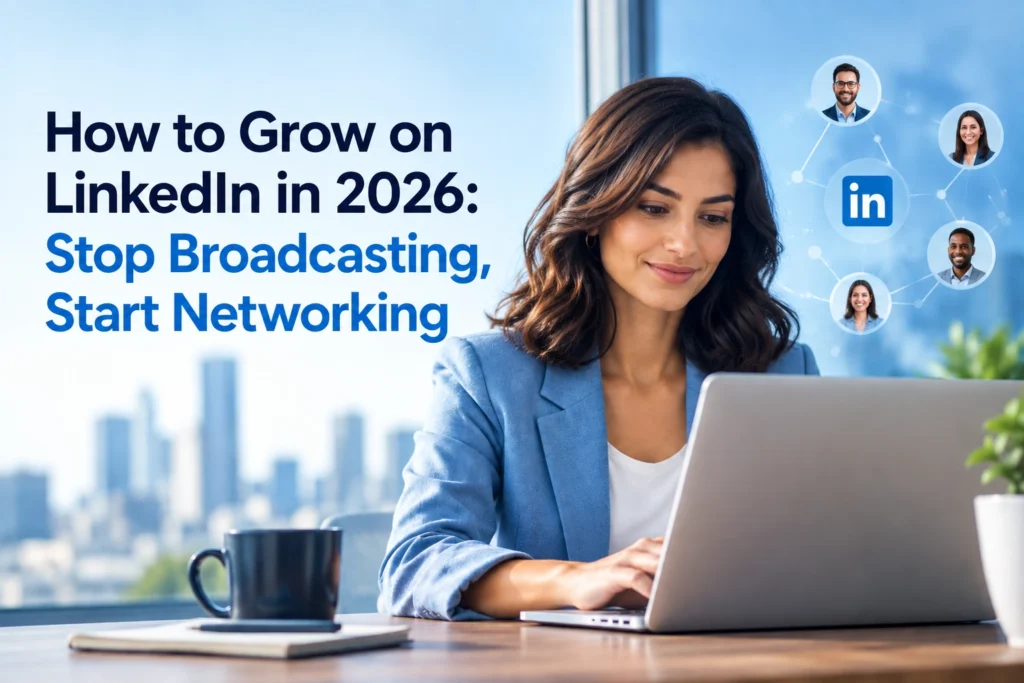
For years, the LinkedIn growth playbook looked simple: post consistently, use a few hashtags, and watch the connection count climb. That playbook is fading fast. In 2026, LinkedIn increasingly rewards professionals who treat the platform less like a billboard and more like a conversation — the comments, DMs, and groups are where real relationships (and real opportunities) are built.
Here’s how to network intentionally on LinkedIn this year, and why it works.
Why Broadcasting Alone No Longer Works
LinkedIn doesn’t show your posts to your entire network at once. When you publish, the platform releases it to a small slice of your first-degree connections first, and only expands distribution if that initial group engages with it meaningfully — through comments and reposts more than passive likes. If that first wave doesn’t respond, the post simply stalls.
This is exactly why “spray and pray” posting has lost its edge. If the people seeing your content aren’t relevant to it, your reach caps out early no matter how good the post is. The fix isn’t posting more — it’s building a network of people who are actually likely to engage with what you share.
Treat LinkedIn as a Conversation Platform
The shift in mindset is simple but important: instead of only broadcasting your own updates, spend real time engaging with other people’s content. LinkedIn’s own product direction backs this up — recent platform updates have leaned into richer engagement signals like post “saves” and “sends,” verified identity badges, and even in-app games designed to keep people coming back and interacting rather than just scrolling past. As industry coverage of these changes has noted, networking on LinkedIn today is less about racking up connection requests and more about building credibility, trust, and meaningful conversation (SocialPilot, 2025 — see references).
So what does intentional networking actually look like day to day?
1. Spend 15–20 Minutes a Day on Thoughtful Comments
Rather than skimming your feed, dedicate a short, consistent block of time to leaving genuinely useful comments — not “Great post!” but a real point, question, or piece of added insight. Focus this time on three groups:
- Ideal clients — the people you actually want to work with.
- Industry influencers — voices your target audience already trusts.
- Complementary service providers — professionals who serve the same audience without competing with you directly.
A well-placed, expert comment does double duty: it puts your name in front of the poster’s audience, and it signals to LinkedIn that you’re a genuine participant in the conversation, not just a broadcaster.
2. Use AI-Powered Search to Find the Right People
Modern LinkedIn tools make it far easier to locate the right people instead of just the most people. Rather than guessing at search filters, you can now describe your ideal connection in plain language — for example, “CFOs in mid-market manufacturing in the U.S.” — and let AI-assisted search surface relevant profiles and content to engage with. Recent platform updates have specifically expanded AI-driven discovery and personalization features across search, job matching, and content recommendations.
3. Send Personalized Connection Requests — After the Conversation, Not Before
Cold connection requests get ignored or, worse, deleted without a second thought. A far more effective approach: engage meaningfully with someone’s content first, then send a connection request that references the specific discussion. This tiny bit of context transforms a generic ask into something that feels earned and remembered.
4. Join or Create Niche Groups and Communities
LinkedIn Groups and Communities remain one of the most underused tools for networking with intent. Niche groups built around a specific topic or industry gather exactly the people you want to reach — self-selected because they already care about the subject. The rule here is simple: share value first, and let selling come naturally, later, once trust is established. Platforms that specialize in social community management consistently emphasize that community-driven engagement — not one-off content blasts — is what compounds into long-term audience loyalty and brand trust.
Quality Over Quantity: The New Networking Math
Perhaps the biggest mindset shift for 2026 is this: a smaller, more relevant network consistently outperforms a larger, disengaged one. Because LinkedIn’s algorithm tests your content against a limited initial audience before deciding whether to expand its reach, having hundreds of connections who never engage actively works against you. A tighter circle of genuinely active, relevant connections gives every post a stronger starting signal — which is what earns it a wider audience in the first place.
Putting It Into Practice
Intentional networking on LinkedIn in 2026 isn’t about doing more — it’s about doing the right things consistently: showing up in the comments that matter, finding the right people with smarter search tools, connecting with context, and building community around shared interests instead of shouting into the void. Do this consistently for a few months, and you’ll likely notice something LinkedIn’s algorithm has been trying to tell everyone for a while now — relationships, not reach, are what actually move the needle.
References
- SocialPilot — 7 New LinkedIn Features and Updates to Grow Your Brand in 2025
- Emplifi — Social Media Updates Resource Hub
- Hootsuite — How the LinkedIn Algorithm Works
Need Help Building Your LinkedIn Strategy?
Intentional networking takes time and consistency — and if you’d rather have experts manage your LinkedIn strategy, content planning, and broader digital growth while you focus on running your business, Spectrum Solutions can help.
SPECTRUM SOLUTIONS
🌐 Website: www.spectrumoman.com
Get in touch today and let’s build a LinkedIn presence that actually grows your network.