In March 2026, Google rolled out one of its most consequential algorithm updates in years — and most businesses didn’t even notice. No dramatic announcements, no overnight traffic crashes. Just a quiet, fundamental shift in how the internet works.
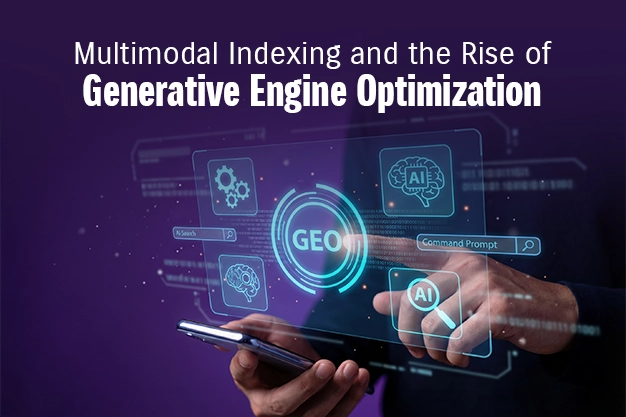
The update placed a major new emphasis on multimodal indexing, bringing videos, podcasts, and rich media formats into Google’s understanding of the web in the same way it has always understood text. And with it came the dawn of a new discipline that every forward-thinking brand needs to know about: Generative Engine Optimization, or GEO.
For businesses across Oman, this is not a technical footnote. It is a strategic turning point.
What Exactly Is Multimodal Indexing?
For most of Google’s history, the search engine was, at its core, a text machine. Web pages, blog posts, and articles formed the backbone of what it indexed and ranked. Images, videos, and audio were treated as supporting elements — understood mainly through the titles, captions, and written descriptions that surrounded them.
That has now changed.
With multimodal indexing, Google can analyse spoken audio and video content directly, identifying topics, entities, brands, and concepts within the media itself — even when no corresponding written article exists. A YouTube explainer produced by a Muscat-based business, or a podcast episode discussing technology solutions for Omani SMEs, can now surface in search results, AI-generated overviews, and knowledge panels as a substantive, citable answer to a user’s query.
In simple terms: your videos and podcasts are no longer just marketing extras. They are now first-class content assets in the eyes of Google’s algorithm.
From SEO to GEO — A Paradigm Shift Worth Understanding
This change in indexing is the foundation of something bigger. It is accelerating a broader transformation in how search itself works — one that moves the goalposts for every brand competing for online visibility.
Traditional SEO was built around a clear objective: appear as a blue link in Google’s top ten results. The tactics were well understood — keywords, backlinks, on-page optimisation, meta tags. Success was measured in rankings and clicks.
Generative Engine Optimization operates on a different logic entirely. The goal is no longer simply to rank. It is to be cited.
As AI-powered search becomes the norm, users increasingly receive direct answers within the search results page itself, or from AI assistants, without ever clicking through to a website. Google’s systems pull specific facts, statistics, and insights from content pieces and present them inside AI-generated summaries. Brands whose content is structured to be trustworthy, authoritative, and easily parsed by these systems get cited and referenced. Those that aren’t risk being summarised without attribution — or ignored altogether.
The shift, in short, is from a click-driven web to a summary-driven web. Influence and authority now matter as much as traffic.
What This Means for Businesses Working with Spectrum Solutions
At Spectrum Solutions Oman, we see this shift not as a challenge but as a significant opportunity for our clients — one that rewards quality, expertise, and strategic content thinking. Here is how we are helping businesses adapt.
Building content that earns citations
AI systems favour content that is structured, data-rich, and easy to parse. This means using clear statistics, well-organised sections, and concise takeaways that a generative model can confidently extract and reference. A well-crafted article on “Digital Marketing Trends in Oman 2026,” for example, structured with distinct sections and clear findings, is far more likely to appear in an AI-generated answer than a loosely written opinion piece.
Optimising video and audio for AI discovery
With multimodal indexing now in play, producing a podcast or video series is only half the work. Accurate transcripts, structured metadata, relevant descriptions, and naturally spoken keywords all help AI systems understand the intent and relevance of media content. A podcast episode discussing ERP solutions for Omani businesses, properly optimised, can now be indexed topic by topic — driving both visibility and credibility in a highly targeted way.
Establishing brand as a trusted source
The businesses that will thrive in a GEO-driven landscape are those that invest in becoming genuine authorities in their field. This means publishing original research, expert guides, and thought leadership content that other sources — including AI systems — want to reference. It also means using schema markup and structured data so that search engines can clearly identify authors, publication dates, and the relationships between content and brand.
Over time, this builds what we think of as domain authority inside AI models themselves — increasing the likelihood that content produced by, or in partnership with, Spectrum Solutions appears when someone asks an AI assistant about digital marketing in Oman, or the best technology partner for their growing business.
Why Now Is the Time to Act
The businesses that adapt early to GEO will build compounding advantages that are difficult for late movers to close. AI systems learn from the content they encounter, and the sources they trust become deeply embedded in how they respond to queries. Waiting until GEO becomes mainstream is a little like waiting to build a website until everyone else already had one.
For Spectrum Solutions Oman, multimodal indexing and GEO represent exactly the kind of evolution we help our clients navigate. The principles are clear: create content of genuine substance, structure it so AI systems can understand and trust it, and invest in the formats — video, audio, long-form expertise — that the new era of search rewards.
The best-ranked page tomorrow will not necessarily be the one most people clicked on today. It will be the one that AI remembers, cites, and trusts. We are here to make sure that page belongs to your business.
Spectrum Solutions Oman is a digital-focused agency delivering web, marketing, and technology solutions to businesses across the region. To learn how we can help you adapt your digital strategy for the GEO era, get in touch with our team.